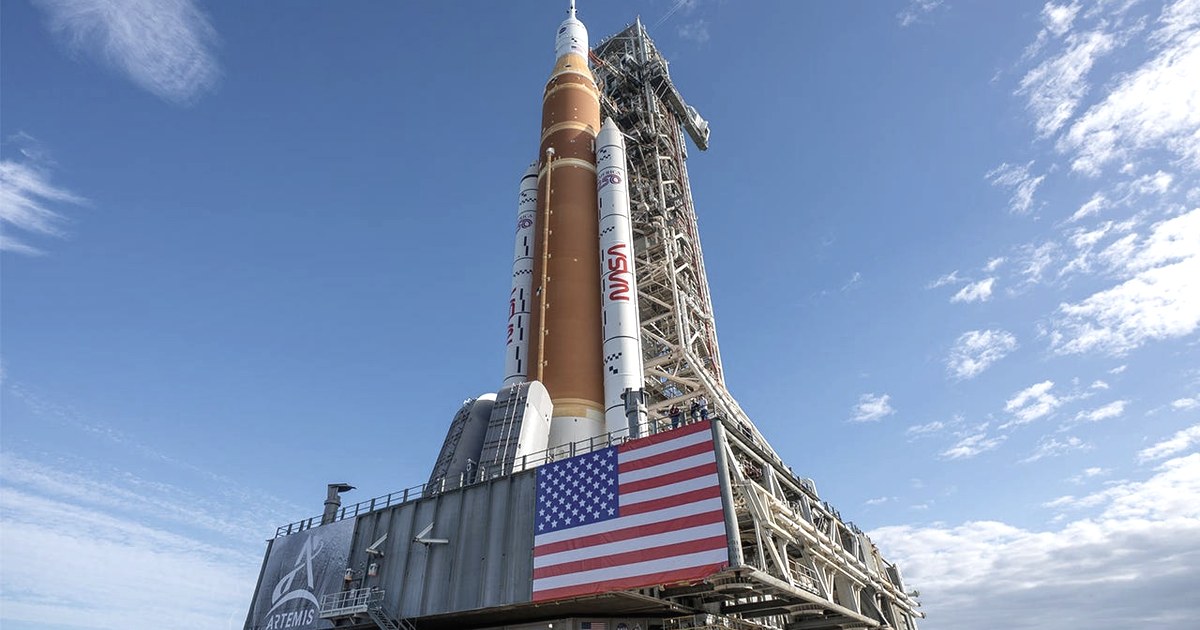
Overview of Artemis II’s Launch
NASA’s Artemis II mission successfully launched from the Kennedy Space Center in Florida on April 1, 2026. The liftoff occurred at 6:35 PM ET, marking a significant moment in space exploration history. The mission carries four astronauts, including three from the United States and one from Canada, on a journey that continues humanity’s exploration of the Moon.
Launch Details
At launch, the twin solid rocket boosters ignited, generating over 75% of the thrust necessary to propel Artemis II, which weighs approximately 5.75 million pounds, into space. Just two minutes post-launch, the boosters separated from the spacecraft to minimize weight, allowing the Orion capsule, aptly named Integrity, to achieve Earth orbit.
Mission Objectives
The Artemis II mission is designed to transport astronauts around the Moon and back, a journey that has not taken place for over five decades since NASA’s Apollo 17 mission. Although the crew will not land on the lunar surface, they are set to travel approximately 250,000 miles, surpassing the Apollo 13 record of 248,655 miles.
Following an initial phase of testing life-support systems while orbiting Earth for about 8.5 minutes, the mission will progress toward the Moon, aiming to arrive on April 6 at an altitude of about 6,000 miles above the lunar surface. After circling the Moon, Artemis II will return to Earth, with a planned splashdown in the Pacific Ocean near San Diego on April 10.
“Artemis II is a pivotal mission that lays the groundwork for future lunar exploration and beyond.”
Significance for Future Missions
This mission serves as NASA’s first crewed flight utilizing the Space Launch System (SLS) and the Orion spacecraft, marking a crucial step toward the goal of returning humans to the Moon. Future missions, including Artemis IV in early 2028, aim to establish a sustainable presence on the lunar surface, with Artemis V following closely behind to begin construction of a base for ongoing exploration.
Astronaut Crew Composition
The Artemis II crew is composed of four highly trained astronauts. Reid Wiseman, serving as Commander, has prior experience as a flight engineer aboard the International Space Station. Victor J. Glover, the mission’s Pilot, is on his second spaceflight, having previously participated in NASA’s SpaceX Crew-1 mission.
Christina Koch, the Mission Specialist, is making her second journey into space and has set records for the longest single spaceflight by a woman. Finally, Jeremy Hansen from Canada will also serve as a Mission Specialist, marking the first instance of a Canadian astronaut traveling around the Moon. Hansen previously participated in NEEMO 19 to simulate deep-space exploration.
Launch Timing and Broadcast
Artemis II is scheduled to launch on April 1, 2026, at 3:24 PM PT / 6:24 PM ET / 11:24 PM BST, translating to 10:24 AM AEDT in Australia. NASA will broadcast the launch live on its YouTube channel starting at 7:45 AM ET, showcasing pre-launch activities and operations. Full launch coverage will be available on NASA+, the agency’s streaming platform, beginning at 12:50 PM ET.
Additionally, viewers can follow real-time updates and highlights of the mission through NASA’s social media accounts on X/Twitter, Facebook, and Twitch, as well as on NASA’s official blog.
Conclusion
The Artemis II mission represents a significant advancement in human space exploration, serving as both a test flight and a stepping stone toward future lunar missions. As the world watches this historic journey, the implications for space travel and exploration remain profound.
Earlier we wrote about Nintendo Switch 2: An Impressive Launch Year Without Iconic Characters, Необычный бой в Crimson Desert: радость и разочарование and Бої в Crimson Desert: Відкритий світ та битви з босами.